
The brilliant gleam of polished chrome is a hallmark of so many Hess Trucks, from the grilles on vintage models to the shiny accents on modern tankers. But cleaning polished chrome requires a gentle touch. If you grab the wrong cleaner or cloth, you can cause irreversible scratches and dullness in seconds. The secret is sticking with non-abrasive tools and pH-neutral cleaners to keep that delicate finish looking brand new and protect your investment.
Table of Contents
Why Proper Chrome Care Is Crucial for Your Collection
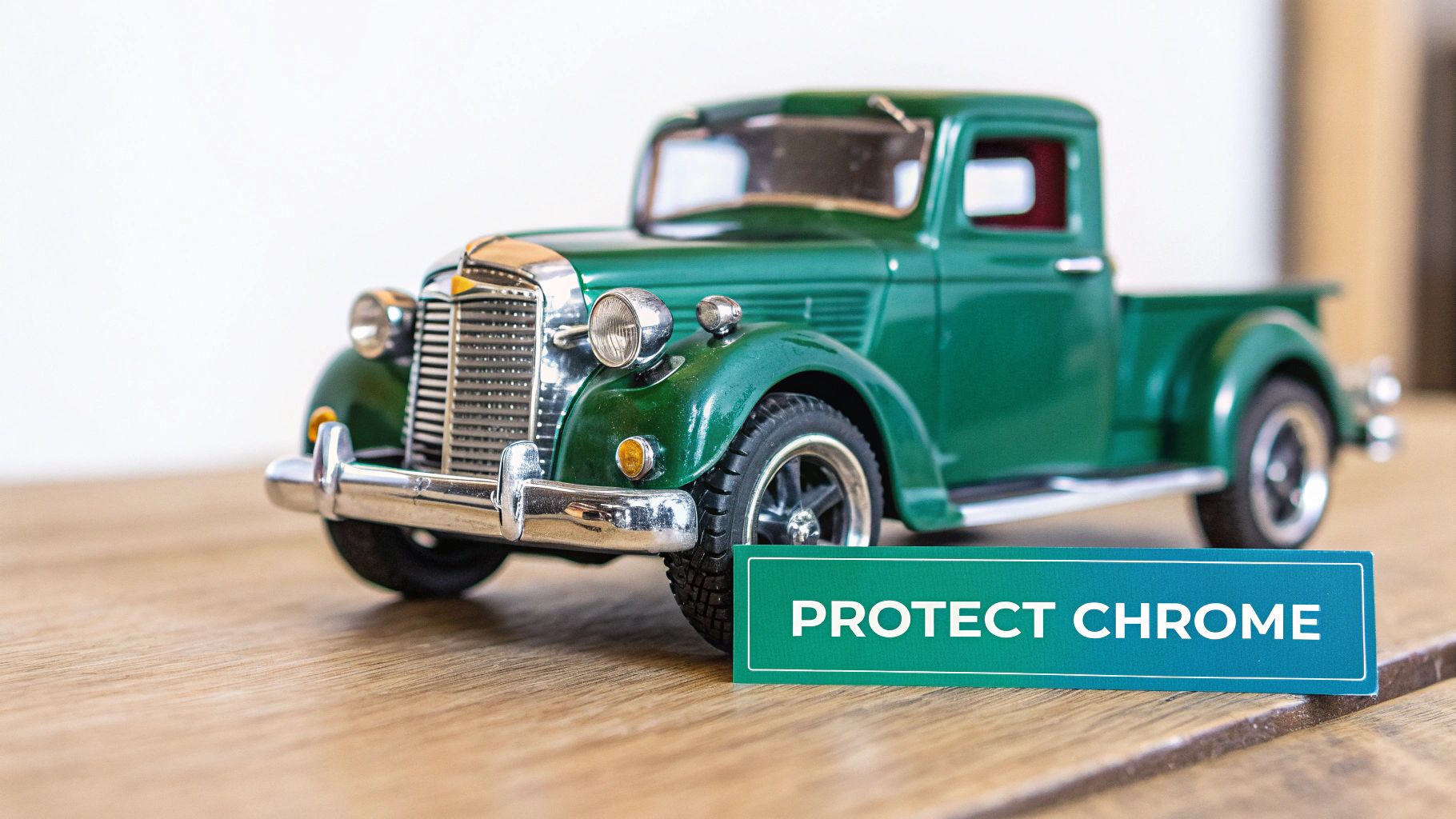
That incredible, mirror-like shine you love is more fragile than it looks. Polished chrome is actually an extremely thin layer of chromium electroplated over a base metal, usually a zinc alloy or steel. While that thin layer provides the signature reflective finish and some corrosion resistance, it's incredibly easy to damage with improper care.
For any serious collector, learning how to clean polished chrome is about way more than just making your trucks look good. It's about preservation. The wrong move can permanently tank both the appearance and the value of your collection.
Common Mistakes That Devalue Collectibles
So many common household cleaners are packed with harsh chemicals like ammonia or acidic agents that are simply too aggressive for chrome. These ingredients can literally etch the surface, leaving behind a cloudy haze that you can't polish out. In the same way, using anything abrasive—even a seemingly innocent paper towel—can create a web of micro-scratches that kills the shine.
Here are the main threats you need to watch out for:
- Micro-Scratches: These tiny scratches are caused by abrasive cloths, powders, or just scrubbing too hard. They scatter light instead of reflecting it, making the chrome look dull and tired.
- Pitting and Flaking: If harsh chemicals or moisture get through the thin chrome layer, the metal underneath can start to corrode. This leads to tiny pits or, in worst-case scenarios, the chrome flaking right off.
- Chemical Hazing: Strong cleaners can have a chemical reaction with the chrome plating itself, leaving a permanent milky or cloudy film.
Understanding just how vulnerable chrome is is the first step. A gentle approach isn't just a suggestion; it’s an absolute must if you want to protect the integrity and value of every piece in your collection.
Protecting this delicate surface really comes down to being proactive. It's especially critical for special editions like the stunning 2006 Hess Mini Chrome Truck NYSE Special Edition, where the chrome is the main event. In the next sections, we'll walk through building the right toolkit and mastering the safe techniques you need to keep every chrome piece looking its absolute best.
Assembling Your Chrome Cleaning Toolkit
Getting the brilliant chrome on your collectibles to shine isn't about scrubbing harder—it's about working smarter with the right tools. One wrong move, like grabbing the kitchen sponge or a bottle of all-purpose cleaner, can instantly create a web of micro-scratches or a chemical haze on that perfect finish.
The good news is, the perfect toolkit is surprisingly simple. It’s all about gentle materials that lift dirt without harming that delicate chrome layer.
The Right Cloths, Cleaners, and Polishes
Your most important tool will be a set of high-quality microfiber cloths. Unlike paper towels or old rags, their soft fibers are designed to trap dust and lift grime without scratching. The official Hess Collector's Microfiber Cloth Set, available in our shop, includes cloths specifically designed for washing, drying, and buffing to ensure a perfect, scratch-free finish.
For routine dusting, a simple mix of mild dish soap and warm water is usually all you need. It’s a pH-neutral solution that safely removes fingerprints and light dust.
When you need a deeper clean to restore that mirror-like shine, you'll want a dedicated chrome polish. Using the wrong cleaner is a huge risk—acidic products can permanently pit chrome in a single use, while alkaline ones can cause discoloration that’s impossible to fix. Investing in a proper chrome polish is a must for any serious collector. To dig deeper, the experts at Chemical Guys have a great guide on how to choose the right chrome cleaners.
Never use common household cleaners like glass cleaner, vinegar, or abrasive powders. Their chemical formulas are far too harsh for delicate electroplated chrome.
To make things crystal clear, here’s a quick-reference table comparing safe options against the risky ones you should avoid at all costs.
Chrome Cleaner Comparison: Safe vs. Unsafe
| Cleaning Agent | Safety for Chrome | Best Use Case | Risk Level |
|---|---|---|---|
| Mild Dish Soap & Water | Excellent | Routine dusting, fingerprint removal. | None |
| Dedicated Chrome Polish | Excellent | Deep cleaning, polishing, tarnish removal. | None |
| Isopropyl Alcohol (Diluted) | Good (with caution) | Removing stubborn sticky residue. | Low |
| Glass Cleaner (Ammonia-based) | UNSAFE | N/A – can cause chemical haze/damage. | High |
| Vinegar or Acidic Cleaners | UNSAFE | N/A – will etch and pit the chrome. | Very High |
| Abrasive Powders/Pastes | UNSAFE | N/A – will scratch and dull the finish. | Very High |
Ultimately, sticking with products specifically made for chrome is the only way to guarantee you're preserving your collectible, not damaging it.
Essential Tools for Detailed Work
Getting into the intricate details of a Hess Truck’s grille or around tiny emblems requires more than just a cloth. This is where a few specialized tools really make a difference.
- Soft-Bristle Brushes: A soft, non-abrasive brush is perfect for getting into tight crevices where dust and polish love to hide. The Hess Mini Detail Brush Set was designed for exactly this, with bristles soft enough to dislodge grime without a single scratch.
- Cotton Swabs: For the tiniest nooks and crannies, nothing beats a simple cotton swab for applying polish or removing residue with precision.
- A Small Bucket: Use one bucket for your soapy water and another for clean rinse water. This simple step keeps you from reapplying grime back onto the surface.
With this simple toolkit, you’re all set to clean your collection safely and effectively, protecting its value for years to come.
The Gentle Method for a Flawless Shine
Alright, you’ve got your toolkit ready to go. Now for the best part—bringing that incredible, factory-fresh gleam back to your Hess Truck. The real secret to cleaning polished chrome isn't about scrubbing harder; it's about being patient and letting the right products do the work for you. Let's walk through the process, from the first wipe-down to that final, satisfying buff.
First things first, prep is everything. Before a drop of water or polish touches that chrome, grab a dry, clean microfiber cloth and give all the chrome parts a gentle wipe. This quick step clears away any loose dust or grit that could act like fine sandpaper during cleaning, saving you from a world of tiny, avoidable scratches.
While you're dusting, take a good look at the chrome under a bright light. Check for any existing issues like deep scratches, pitting, or flaking. Knowing where these trouble spots are beforehand helps you remember to use an even lighter touch in those areas or recognize what might be beyond a simple polish.
The Initial Wash to Lift Grime
With the loose debris gone, it's time for a gentle wash. Just mix a few drops of mild dish soap into a small bucket of warm water to create a light, sudsy solution. This simple mix is all you need—it's perfectly pH-neutral and won’t cause any harm to that delicate chrome finish.
Dip a fresh microfiber cloth into your soapy water, wring it out so it’s just damp, and carefully wipe down the chrome. You’re not scrubbing here; you’re just lifting off surface grime, fingerprints, and any oily residue. For those tricky spots like grilles or emblems, a soft-bristle brush (like one from the Hess Mini Detail Brush Set) can get in there without you needing to apply too much pressure.
This quick visual breaks down how simple the prep is.
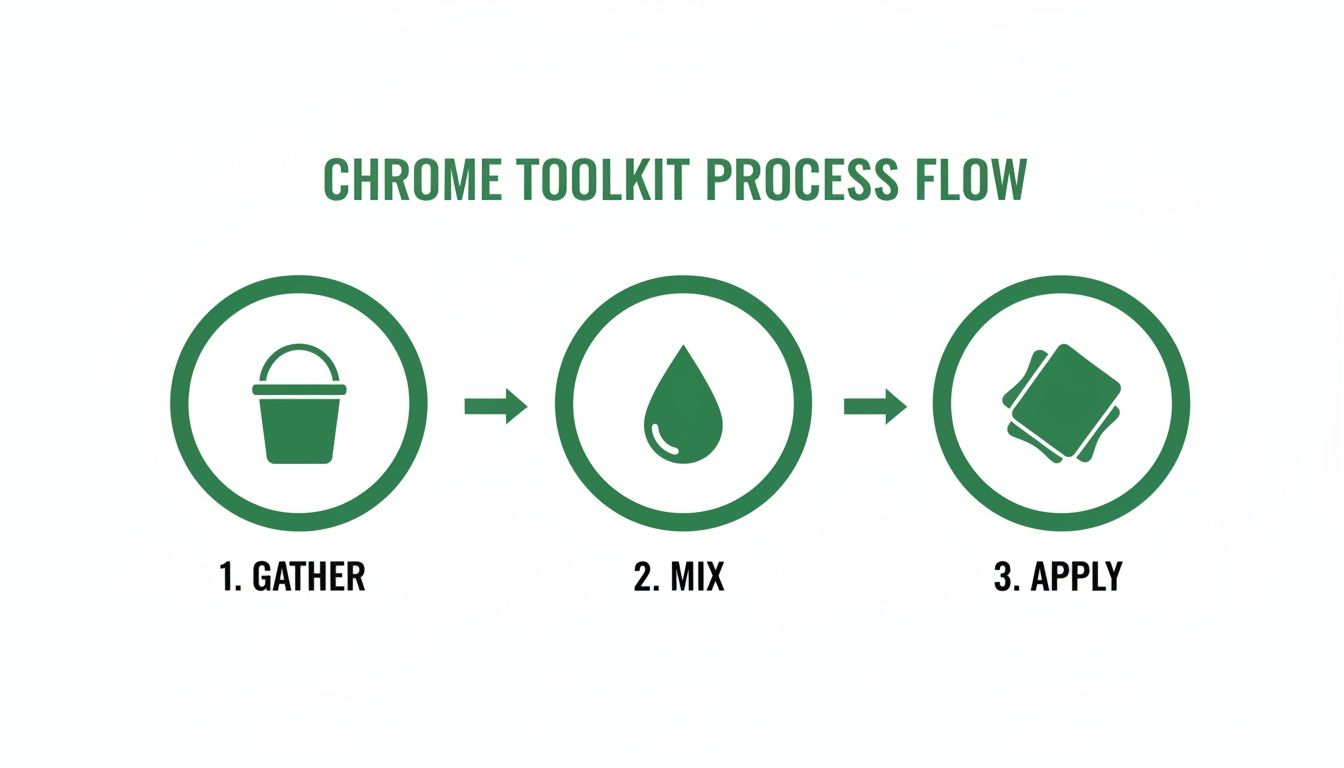
It really just comes down to having the right stuff, mixing a gentle cleaner, and applying it with care. No harsh chemicals or aggressive scrubbing needed.
After the wash, take another cloth dampened with clean water and rinse off any soap residue. Then, grab a third, completely dry microfiber cloth to pat the chrome dry. Never let water air-dry on chrome. It’s the fastest way to get those annoying water spots that just dull the whole look.
Polishing for a Mirror Finish
Once the surface is totally clean and dry, it’s polish time. Make sure you’re using a high-quality, non-abrasive chrome polish made specifically for delicate surfaces. We recommend the Hess Collector's Chrome Polish, formulated to be gentle on vintage plating while effectively removing light tarnish.
Squeeze a small, pea-sized dot of polish onto a clean part of your microfiber cloth. Using very light pressure, work the polish into the chrome with small, overlapping circles. Seriously, let the product do the heavy lifting—there's no need to muscle it.
Let the polish haze over. Most quality chrome polishes need a few minutes to dry to a light haze. Don't skip this. This is when the polishing agents are doing their magic, bonding with and lifting away any leftover tarnish or light oxidation.
After it has hazed over, take one last clean microfiber cloth and start buffing. Use light, quick circular motions, and keep turning the cloth to a fresh side. You'll see the haze vanish, revealing that brilliant, streak-free mirror shine underneath. This final buff is what really brings out the deep, reflective quality that makes chrome look so incredible.
Tackling Tough Issues Like Tarnish and Light Rust
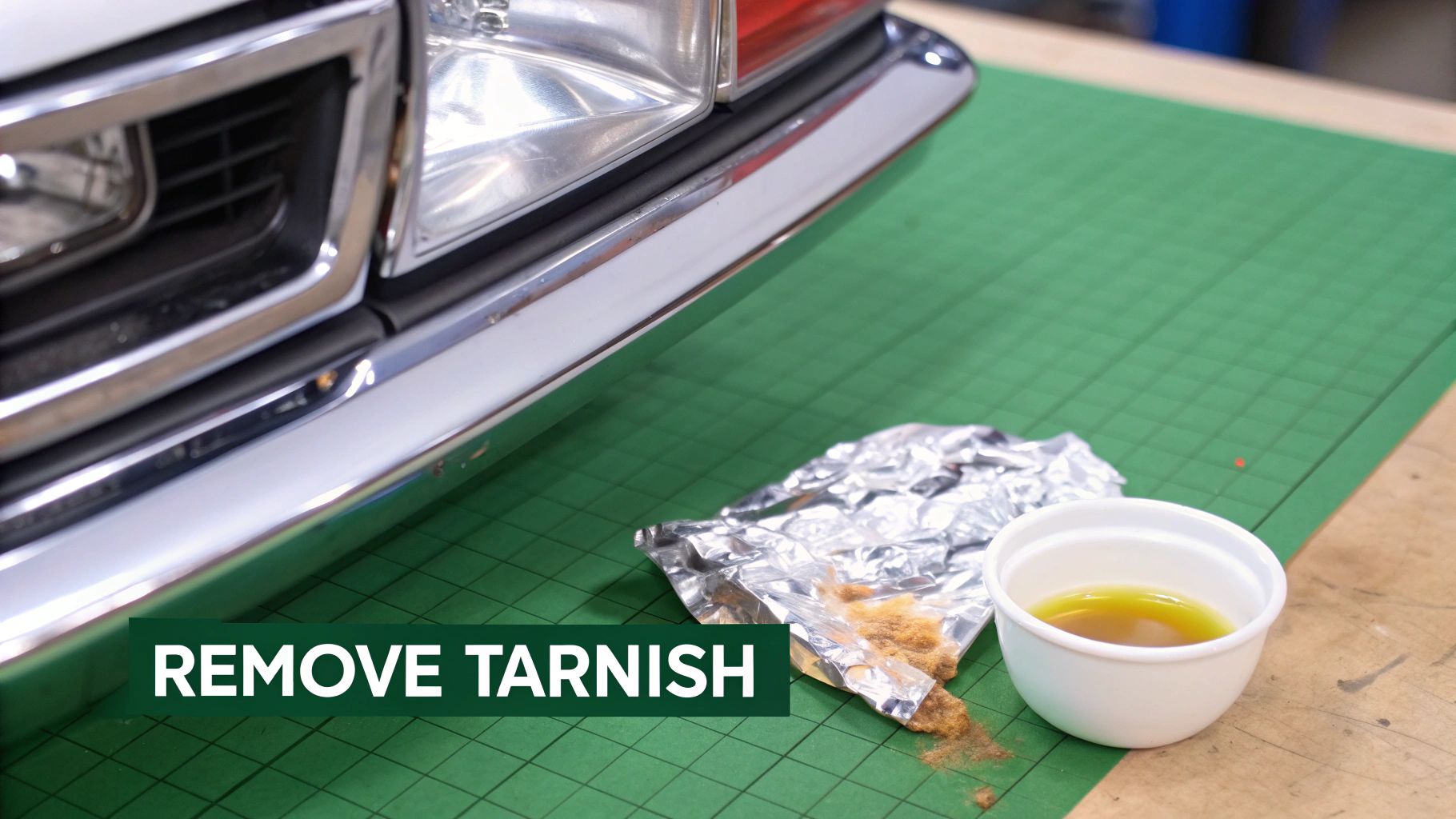
Sometimes, even after a good wash, you’ll notice stubborn spots that just refuse to disappear. This is pretty common on vintage Hess Trucks, especially models that have spent years in less-than-ideal spots like a damp basement. You might see a faint yellowish haze—that's tarnish—or even tiny, pepper-like specks of surface rust.
Don't panic. These issues are almost always treatable if you use the right approach. The key is to always start with the gentlest method first and only move on to something stronger if you absolutely have to. A good chrome polish is usually the best place to start, but for those more stubborn spots, a couple of household items can work wonders.
Using Mild Acids for Tarnish Removal
For a bit of light tarnish, a simple diluted white vinegar solution can be incredibly effective. Its mild acidity is just enough to break down the oxidation without being harsh on the chrome itself.
Here’s what to do:
- Mix your solution: Combine equal parts white vinegar and distilled water. It’s important to use distilled water here, because regular tap water can leave behind its own mineral spots.
- Apply it carefully: Dab a small section of a microfiber cloth into the solution. Now, gently rub the tarnished spot using small, circular motions. You should start to see the tarnish lifting right off onto the cloth.
- Neutralize and rinse: This is a crucial step. Right after you’ve treated the spot, wipe the area down with a different cloth dampened with clean distilled water to neutralize the acid.
- Dry it off: Finally, take a clean, dry microfiber cloth and buff the entire area until it's completely dry. This prevents water spots and brings back that beautiful shine.
This trick is perfect for handling that light discoloration that a simple wash-and-dry just can't touch.
Safely Addressing Light Surface Rust
If you spot very light, superficial rust specks, you can often remove them with a surprising tool: a crumpled-up ball of aluminum foil. When you dip it in water, the foil triggers a chemical reaction that helps dissolve the iron oxide (rust). And since aluminum is softer than chrome, it won't scratch the finish.
To try this, just dip a small piece of balled-up foil into clean water and rub it gently over the rust spot. The rust should lift away with very little effort. Just like with the vinegar method, be sure to rinse and dry the area completely when you're done.
It's vital to know the difference between treatable surface issues and permanent damage. If you see any bubbling, flaking, or deep pits in the chrome, stop what you’re doing immediately. Those are signs of chrome failure—the plating has been breached, and more cleaning will only make it worse. That kind of damage requires professional restoration.
Long-Term Protection and Smart Storage Strategies
Once you’ve got that brilliant shine back on your chrome, the next challenge is keeping it there. Honestly, a little proactive protection goes a long way and saves you from having to do a deep clean all over again.
Think of this final step as giving your Hess Truck’s chrome an invisible coat of armor. It seals the surface, creating a barrier that stops moisture, oxygen, and dust from ever reaching the metal itself. This is your best defense against the slow, creeping return of tarnish and corrosion.
Sealing the Shine with Wax or Sealant
With the chrome perfectly clean and polished, grab a high-quality carnauba wax or a modern synthetic paint sealant. The Hess Collector's Chrome Sealant is a synthetic formula engineered to create a durable, clear barrier that repels dust and moisture for months, making it an excellent choice for long-term protection.
If you prefer a classic approach, carnauba wax also gives chrome a warm, deep gloss and makes water bead right off. It creates a slick surface that dust and fingerprints have a tough time sticking to.
Whichever you choose, the application is just like polishing. Use a tiny amount on a fresh microfiber cloth, spread it in a thin, even layer, and let it dry to a haze. Then, grab another clean cloth and buff it off for a protected, streak-free finish.
This isn’t just for looks. A huge number of refinishing jobs are due to preventable issues. In the auto world, for instance, improper wheel cleaning accounts for over 30% of all wheel refinishing work—a problem that proper maintenance could have easily avoided. This stat really drives home how vital proactive care is for collectors trying to preserve the value of their prized trucks. You can find more tips on preventative wheel care on hypercleanstore.com.
Smart Storage for Lasting Brilliance
Where you keep your Hess Trucks is just as important as how you clean them. The right environment can dramatically slow down the natural aging process of chrome.
The two main things you’re fighting are humidity and direct sunlight.
- Humidity: Moisture in the air is the number one cause of oxidation and rust. Your best bet is to store your collection in a dry, climate-controlled room. Basements and garages are often a bad idea because the temperature swings can cause condensation to form right on the chrome.
- Sunlight: The UV rays from direct sunlight can break down protective coatings and, over time, can even harm the chrome finish itself. Always display your trucks away from windows that get hit with intense, direct sun.
Glass or acrylic display cases are fantastic because they keep the dust off while letting you admire your collection. Just make sure the case has a little ventilation so moisture can’t get trapped inside. It’s also wise to check what the case is made of; some plastics and woods can release chemicals that might tarnish chrome over long periods.
If you’re looking for inspiration, seeing how other collectors display their fleets can give you some great ideas. Check out the wide range of setups in the Hess Truck Collectors gallery. By combining a good protective sealant with smart storage, you’re setting up your collection to stay in pristine condition for years to come.
Frequently Asked Questions About Hess Truck Chrome Care
Even with a detailed guide in hand, questions always come up once you start working on your collection. And when it comes to something as unforgiving as chrome, it’s always better to ask first than to make a mistake you can’t undo. We’ve pulled together some of the most common questions we hear from fellow collectors to help you clean with confidence.
These are the real-world scenarios that pop up, from how often to clean to dealing with unexpected damage. Getting these details right is the secret to keeping that factory shine for years to come.
How Often Should I Clean My Hess Truck Chrome?
For trucks sitting on a display shelf, a light dusting once a week with a quality microfiber cloth is all you need. This quick pass stops airborne dust and grime from settling in and dulling the finish over time.
A full, deep clean and polish is a much rarer event. You’ll probably only need to do this once or twice a year, or if you spot fingerprints or other smudges that a dry cloth can’t handle. Remember, over-cleaning can be just as bad as neglect—you don't want to wear down the chrome's delicate surface unnecessarily.
The golden rule of chrome care is that less is often more. Aggressive or frequent polishing can wear down the delicate top layer over time. Stick to a minimal maintenance schedule to keep it looking its best.
Can I Use Glass Cleaner on Chrome Parts?
This is a big one, and the answer is a hard no. Never use a glass cleaner like Windex on your Hess Truck’s chrome. Nearly all of them contain ammonia or other harsh chemicals that are incredibly aggressive and will permanently damage chrome plating.
Using them is a shortcut to irreversible problems, including:
- Chemical Hazing: A cloudy or milky film that you can’t polish away.
- Discoloration: A strange yellow or blue tint that ruins the look.
- Pitting: Tiny pits that form as the chemicals literally eat into the chrome.
For more on troubleshooting common problems, our complete collector FAQs page has additional tips. Your best bet is always to stick with a pH-neutral, chrome-safe cleaner or a simple mix of mild soap and water.
What If I See the Chrome Flaking or Peeling?
If you spot any chrome that is flaking, peeling, or bubbling, stop everything immediately. Don't wipe it, don't polish it, don't even touch it. This is a tell-tale sign of plating failure, which means the bond between the chrome layer and the base material has been compromised.
Any rubbing or polishing at this point will only make it worse, causing even more of the chrome to lift off. This kind of damage is beyond a simple cleaning fix and requires professional restoration and re-plating to be corrected. The best thing you can do is leave the damaged area alone to prevent the flaking from spreading.
At Hess Truck Collectors, we're passionate about helping you preserve the history and beauty of every truck in your collection. Explore our full range of collectibles and care accessories at https://www.hesstruckcollectors.com.
Composed with the Outrank app